BBC director-general Matt Brittin has said artificial intelligence will not replace human creators, despite recently watching what he described as a “pretty good” AI-generated episode of Doctor Who.
Speaking at the Royal Television Society’s London convention in 2026, Brittin said the technology had put powerful creative tools in the hands of a vast number of people.
“Everyone’s got the ability in their hands, or six billion people have, to create content at the standard of a Hollywood studio,” he said.
“In some cases, it’s not perfect, but look at what you can do. That’s changing all the time.”
Brittin said someone had recently sent him a 50-minute, AI-generated episode of Doctor Who.
“It’s pretty good,” he said. “I mean, it’s not going to replace humans. So, everyone’s a creator.”
His comments follow remarks made on Sunday With Laura Kuenssberg, where he said he would allow AI to present future programmes “within guardrails”. He also said the BBC wanted to “experiment with this technology”.
The BBC is considering the potential uses of AI as the corporation faces significant financial pressure. In June, it announced plans for savings across its news, nations and content divisions. Those plans are set to deliver £160 million of the £500 million in savings the BBC says it needs by 2028/29.
Around 2,000 jobs are expected to be cut as part of the process. The corporation has most recently announced 41 job losses at BBC Sport.
Brittin said the BBC’s financial position was linked to uncertainty over its future funding and charter. “The money runs out at the end of next year unless we have a new charter,” he said, adding that the way the corporation is funded through the licence fee was “a flush”.
“We need a new mechanism if we’re going to have the sort of scale of service media that we’ve had in the past,” he said. “So, that’s all contributing to the jeopardy.”
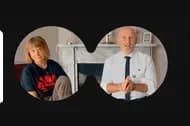
Asked by interviewer Kirsty Young why the BBC had announced cuts gradually instead of all at once, Brittin said the changes affected people’s lives.
“Firstly, all of those changes involve people and their lives,” he said. “I’m having conversations with people whose jobs are at risk on a daily basis. I’ve explained in detail why we’re in this position.”
He said the BBC’s approach was to inform people when proposed changes were ready, rather than announce all of the cuts simultaneously.
“I think the right principle is to tell people as soon as you can if there’s something coming to them and manage that in the best way you can for all people in their lives,” Brittin said.
“So, our approach has been, as we’re ready to kind of propose changes, to tell people, and that’s painful. But we can’t do any faster than we’re ready to do.”
Despite the rapid pace of technological change and the corporation’s financial difficulties, Brittin said he remained positive about the BBC’s long-term prospects. He said he wanted the broadcaster to “bring people together”.
Brittin took over as director-general in May. The former Google executive succeeded Tim Davie and is the first director-general since Greg Dyke in 2000 to take on the role without having previously worked at the BBC.
Addressing his lack of broadcasting experience, Brittin said he had experience running large and complex organisations, as well as knowledge of technology, changing behaviour and regulation.
“You usually come up from within it, or you run a smaller organisation,” he said. “But some experience of technology and the pace of changing how that’s changing behaviour, some experience of regulation and so on.
“And, you know, I’ve got a love for the BBC, having grown up with it.”
The BBC’s latest annual report said the corporation’s financial outlook had “deteriorated” in the second half of 2025. The report also described the broadcaster’s ongoing efforts to manage its finances while it considers how technology, including AI, may affect future programming and creation.